It is apparent that five axis machining is becoming increasingly popular in modern metal cutting. Five-axis
machining provides significant advantages such as machining complex-shaped parts by use of one set-up
without changing the location of the workpiece, high machining accuracy, and reduced cycle time.
Advanced technology of workpiece fabrication has led to increased capabilities of precise forging, casting,
and mainstreaming additive manufacturing (AM). This has resulted in the increased complexity of workpiece
geometry, decreasing machining allowance and material by cutting operations and achieving end results which
reflect the final shape of the workpiece. The requests for high-performance cutting tools intended for
finishing and semi-finishing geometrically complex surfaces are now vitally important.
Ball-nose milling cutters are considered traditional tools for machining 3D surfaces. Ball-nose cutters are
the most common tools for semi-finishing and finishing profile in milling operations. Progress in the field
of five-axis machining centers, and a significant step forward in modern CAM systems have emerged tools with
a different cutting geometry, referred to as segment or barrel-shape endmills. Even though these tools are
well known to machinists, they remain ignored. Five-axis machining combined with CNC software and computer
modeling of complex tool configurations has reemerged the use of circular segment endmill applications.
The cutting edge of these endmills is an arc that represents a segment of a circle with a radius larger than
the nominal radius of a tool. For comparison purposes, in ball-nose cutters the tool radius is the radius of
the cutting edge. Machining surfaces using 'passes technique' segment-type endmills enables a substantially
increased step size compared to ball-nose cutters, thus reducing the cutting time. A three-axis CNC
controlled cutting process cannot guarantee the correct position of a barrel-shaped cutting tool when
machining complex surfaces. The five-axis machining concept allows taking full advantage of segment
endmills.
Depending on the orientation of the cutting edge relative to the tool axis, segment endmills possess various
configurations such as pure barrel, tapered barrel, lens, and oval or parabolic shapes. The form of the tool
cutting edge determines the tool application. For example, lens-shaped tools are suitable for both five and
three-axis machines, while endmills with a tapered barrel profile are intended for five-axis machines.
Segment cutter designs appear in multi-flute solid endmills that deliver ultimate tool accuracy and maximize
the number of teeth on the cutting tool.
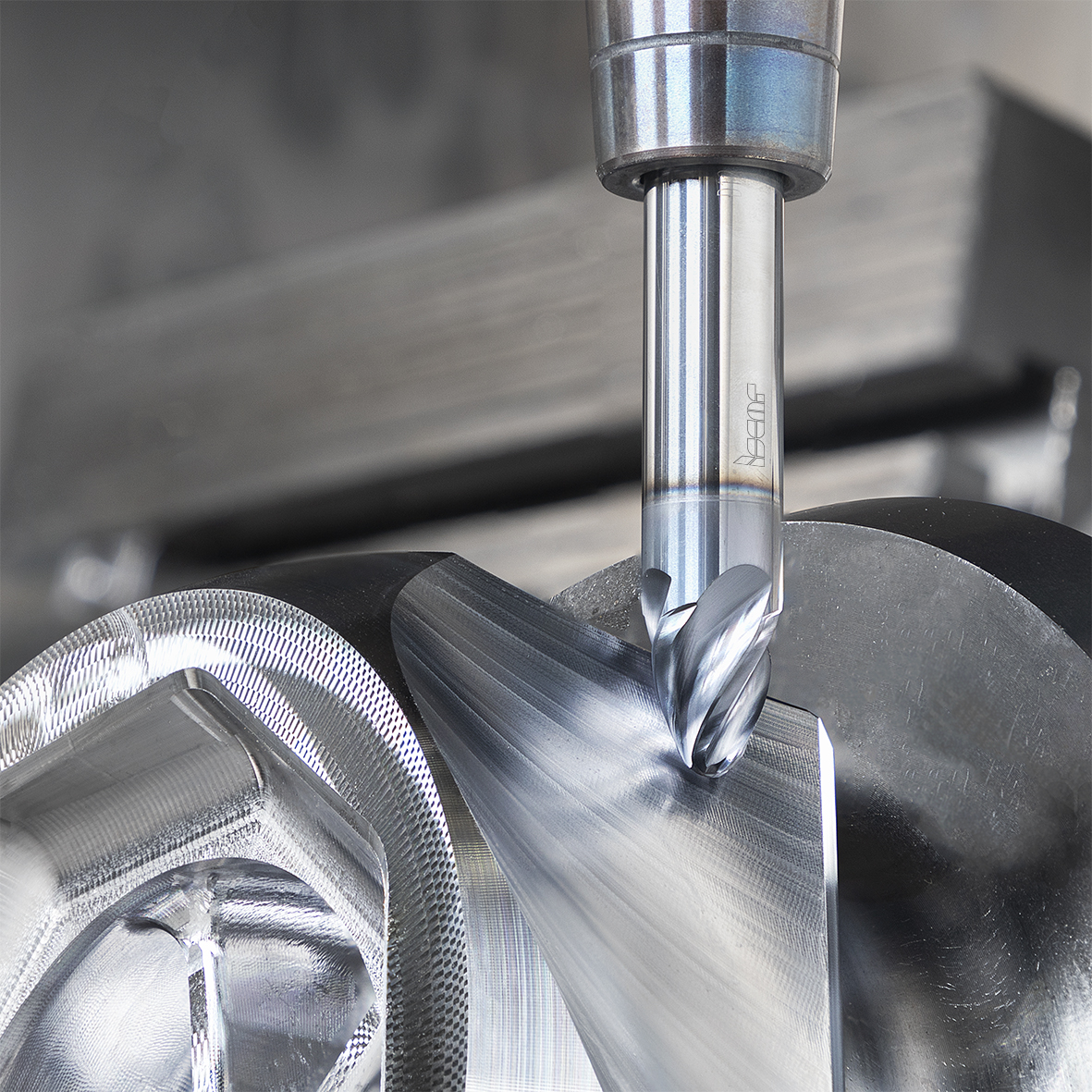
The ISCAR NEOBARREL tool line includes several tool families. These are solid carbide endmills (SCEM) in a
diameter range of 8-12 mm (Fig. 1). The 10 mm oval-shaped solid carbide endmill has an arcuated peripheral
cutting edge in a radius of 85 mm. This endmill quadruples the step size repeatability compared to a 10 mm
ball-nose cutter and provides the same machined surface finish quality.
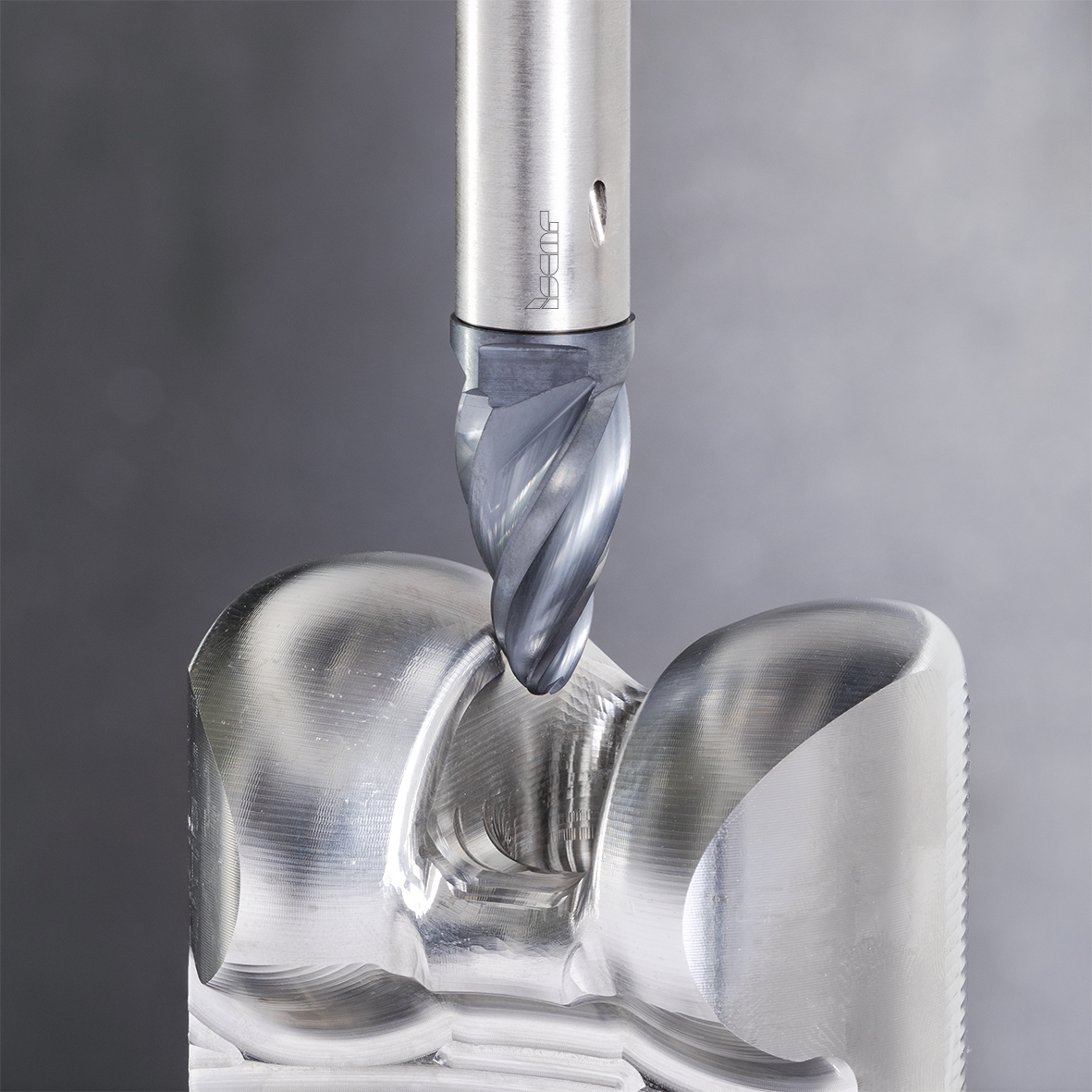
ISCAR MULTI-MASTER tool line refers to assembled tools that mount exchangeable carbide heads. This line
offers new barrel-shaped heads that feature the same cutting geometry and diameter range as SCEM and provide
a wide array of options within the MULTI-MASTER line for five-axis machines (Fig. 2). The exchangeable head
concept featured in the MULTI-MASTER tool line guarantees rational use of cemented carbide with a true
economical advantage. Diverse tool bodies, extensions, and reducers enable the customization of a modular
tool assembly for complex machining projects.
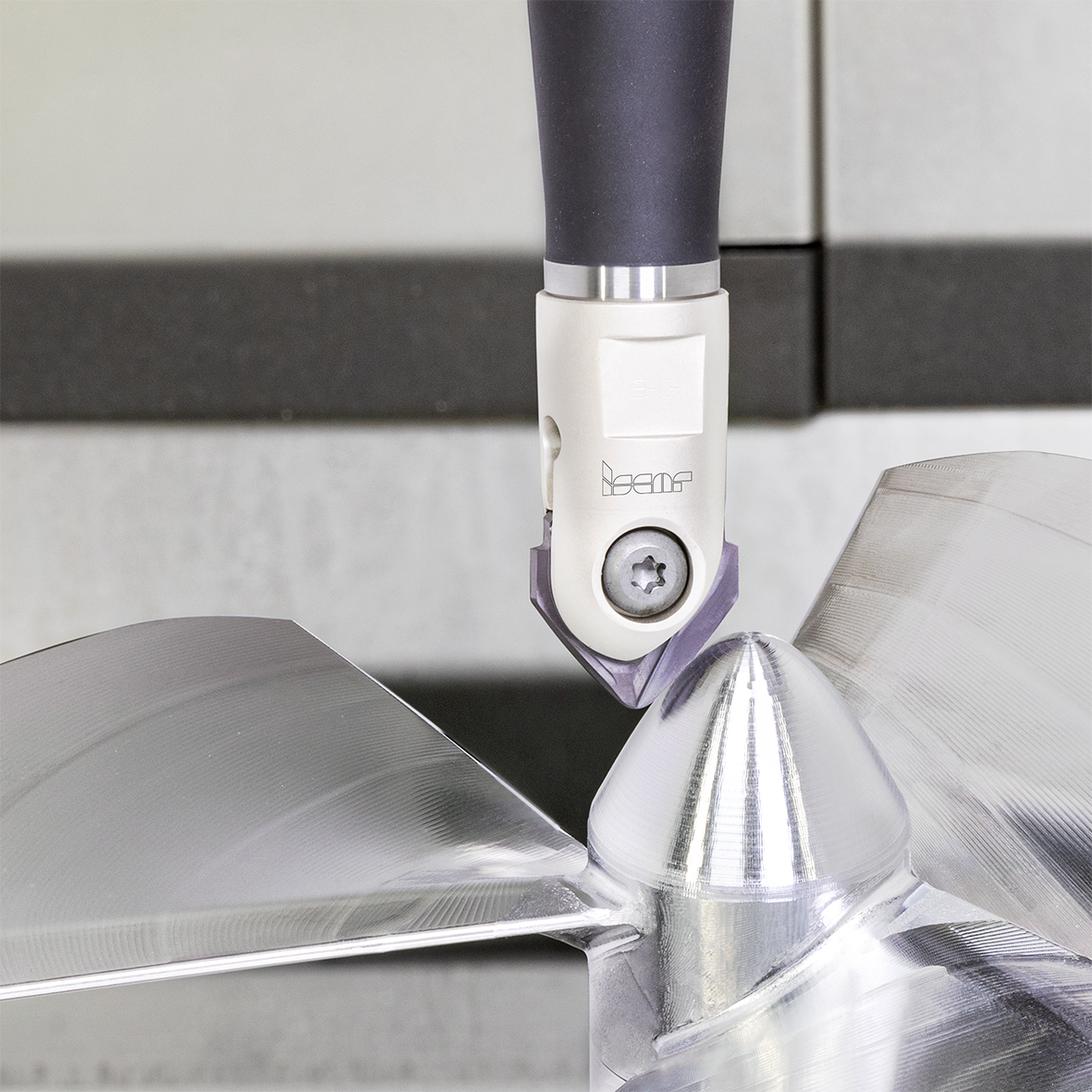
Recently, ISCAR unveiled a new family of segment endmills which utilize the single insert tool design
principle (Fig. 3). It is a known fact that the accurate parameters of a single-insert tool are lower when
compared to a cutter with exchangeable carbide heads, not to mention the solid carbide endmill. Precision
can be compromised if we analyze how a single insert tool, with two teeth, can compete against a multi-flute
SCEM or carbide head tool.
To dissipate the arisen doubts about the reasonability of the single insert segment tool design, we should
consider several aspects.
The single-insert tool concept facilitates cost-effectiveness by expanding the diameter range of segment
mills. These cutters feature nominal diameters of 16-25 mm. A durable insert structure and highly rigid
insert clamping enable increasing the feed per tooth in comparison with the feed values that are recommended
for solid carbide endmills and exchangeable heads. This ensures an appropriate level of feed and speed to
machine productively. When operational stability is poor, decreasing the number of teeth contributes to
vibration control. Inserts mounted on the BALLPLUS tool family can transform the tool to a segment endmill
by use of inserts only. ISCAR BALLPLUS tools include a diverse choice of tool bodies, adapters, and
extensions, which greatly simplify tool customization. Choosing a single-insert segment tool design is now
more logical and justified.
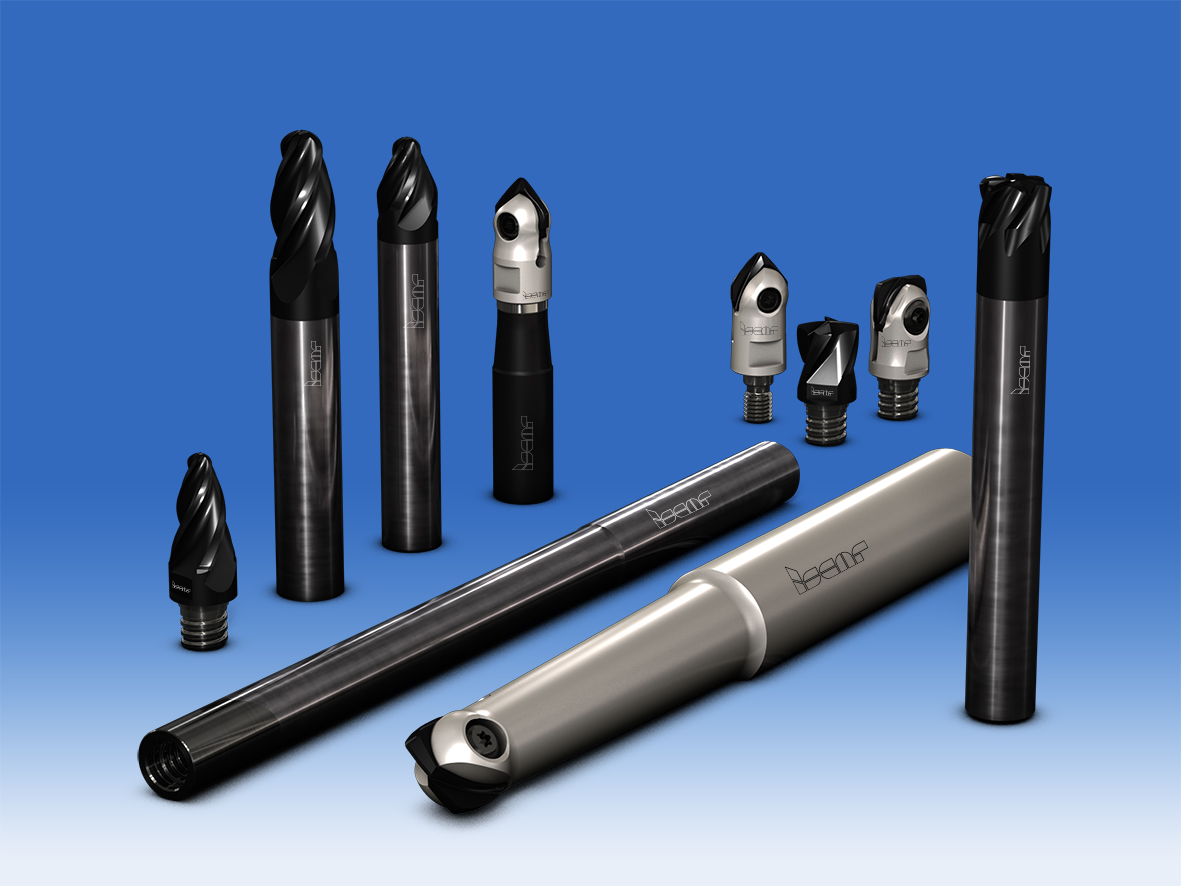
In modern manufacturing, barrel-shaped mills have good prospects. The metalworking industry has found many
uses for applying a multitude of cutting barrel designs. These include solid carbide endmills, cutters with
exchangeable heads, and single-insert tools (Fig. 4), all of which have formed a complete segment of profile
milling tools with a challenging future.